Skip to product information
1 of 17

煎茶 中国茶 台湾茶向け 日本の急須/茶壺専門店 東山堂

Kyoto ware Shoami kiln blue and white auspicious pattern teapot 130ml

Kyoto ware Shoami kiln blue and white auspicious pattern teapot 130ml

Regular price ¥19,800 JPY
Regular price Sale price ¥19,800 JPY
Sale Sold out
Taxes included. Shipping calculated at checkout.
A blue-and-white auspicious pattern teapot for Chinese and Taiwanese tea by Shoami kiln.

<About Blue-and-White auspicious pattern>

Auspicious pattern is a style of blue-and-white porcelain produced in Jingdezhen, China, during the late Ming dynasty and has been highly prized by Japanese tea masters.


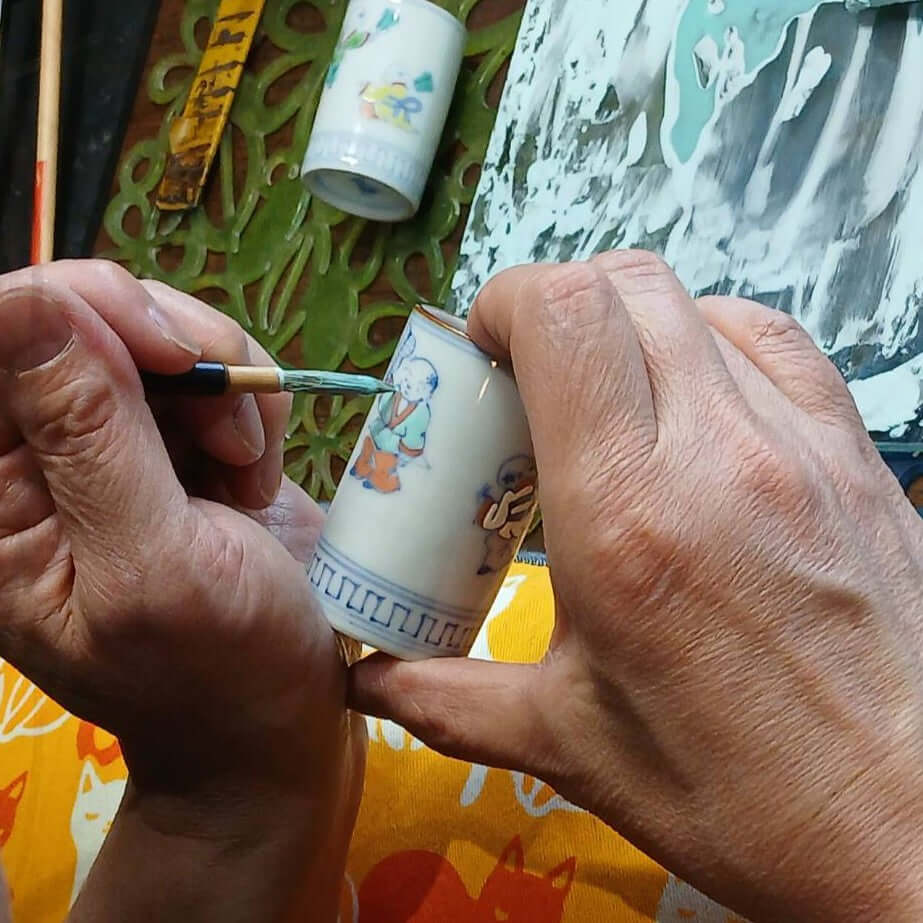
Characterized by intricate geometric, arabesque, and auspicious motifs, it is often used in tea ceremony utensils as auspicious designs. This teapot is meticulously hand-painted with traditional auspicious motifs, creating an elegant atmosphere.


<Shoami kiln's Skills and Traditional Tea Ceremony Utensils>

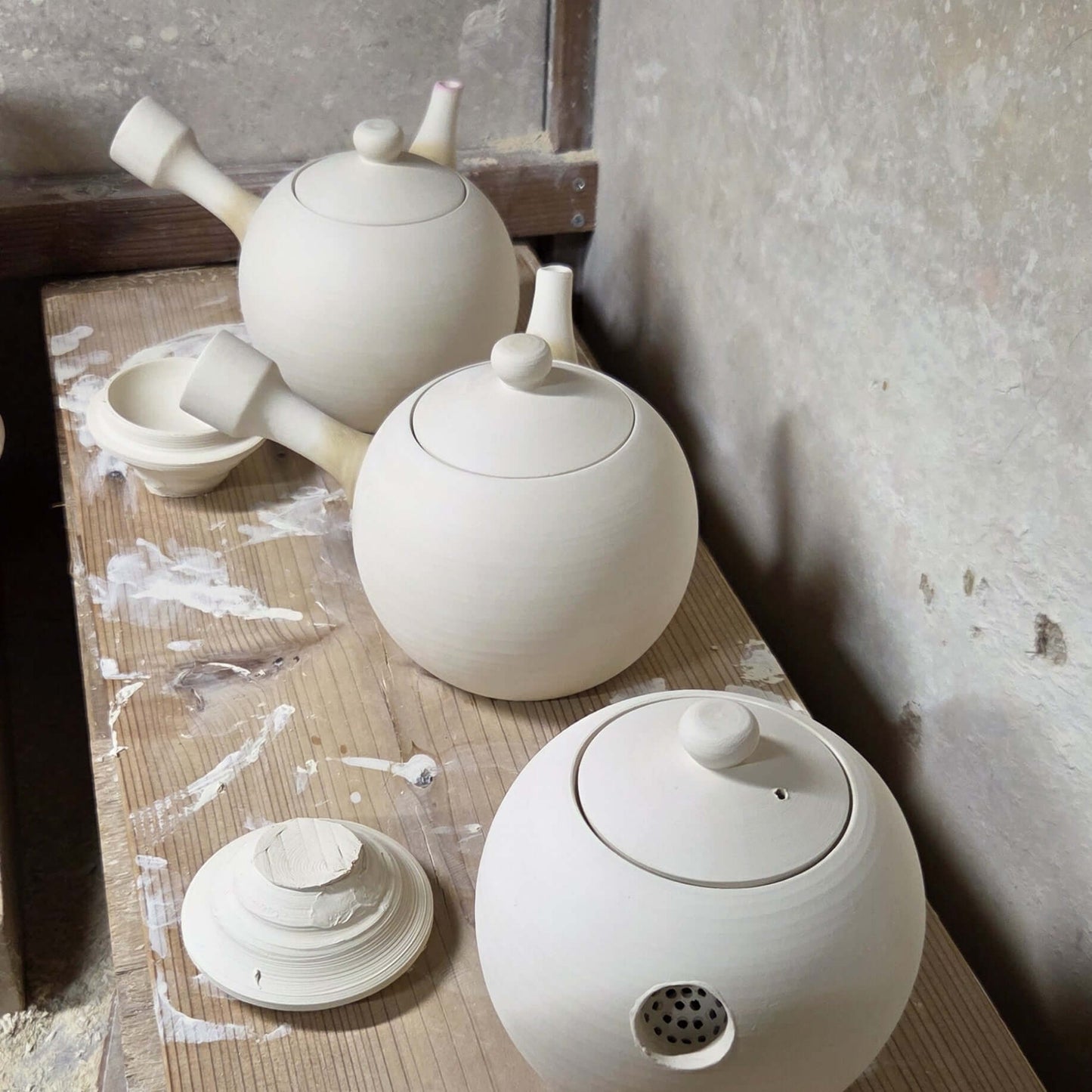
As a traditional Kyoto kiln, Shoami continues to craft tea utensils using techniques passed down through generations. Their beautiful forms are crafted on a potter's wheel and hand-painted by artisans.


Each carefully painted stroke of the pattern exudes a delicacy and warmth that cannot be achieved by machine, making this a masterpiece that you will grow to love the more you use it. The pottery's craftsmanship and aesthetic sense are evident in this pottery, which has been producing high-quality tea utensils for many years.


(Shoami kiln history)

After training under Shibata Nyoami in 1930, the first generation Shoami opened his own kiln.


In 1993, the second generation Shoami took over.


The kiln primarily produces porcelain blue-and-white, overglaze, kouchin, and brocade utensils for sencha and matcha tea ceremonies.


The kiln also produces porcelains other than tea ceremonies, such as tableware and incense burners.


In 2022, the third generation Shoami took over.


Kiln: Shoami (Kyoto)

Shaping: Wheel-thrown

Firing: Gas kiln

Type: Porcelain

Size: Total length 12.5cm (including handle and spout), body diameter 7cm, height 9cm

Capacity: 130ml full, 100ml usable

Weight: Approximately 150g

Packaging: Paper box

Note: As this is a handmade product, slight variations may occur between each piece.

The bottom of the lid is long, preventing water from leaking between the body and the lid when pouring. Pressing the hole on the lid will not stop the water from flowing.


<Kyoto Ware>

Kyoto Ware is a type of potteries ware made in Kyoto City. Beginning in the Edo period (circa 1800), with the rise of the tea ceremony, many tea utensils for matcha and sencha were produced. It flourished against the backdrop of Kyoto's sophisticated culture, with the patronage of temples, shrines, nobles, and merchants.


They specialize in ceramics with vivid colors such as blue and white porcelain, red porcelain, and gold porcelain, as well as intricately crafted ceramics. They incorporate a variety of techniques and styles, and have a high level of aesthetic sense and modeling technique.

Low stock: 1 left

View full details

FAQ

Which type of of tea can I brew with the teapot?

It can be used for any type of tea. However, unglazed pottery is more likely to absorb the flavor of the tea leaves. By using different tea utensils for each type of tea, you can enjoy the flavor of the tea to the fullest.

For example, in the case of Japanese tea, sencha, fukamushicha, genmaicha, and gyokuro are all in the same family, but since hojicha has a strong roasted aroma, we recommend using a different tea utensil.

However, glazed pottery or porcelain tea utensils do not absorb the flavor of the tea leaves, so they are suitable for brewing various types of tea.

How do you wash a teapot?

Please wash the teapot with water, without using detergent. Ceramic teapots easily absorb detergent ingredients, which can affect the flavor of the tea.

Tea leaves remaining in the teapot are the main cause of tea stains. After brewing tea, we recommend removing the tea leaves once they have cooled and rinsing them with water.

Moisture remaining in the teapot can cause mold. Turning the teapot upside down will help it dry faster.

We do not recommend washing it in the dishwasher. Please wash by hand.

Can I remove tea stains from a teapot?

Here's how to remove tea stains.

1. In a bowl or pot, mix 24g of baking soda with 1 liter of water at 30-40°C.

*Do not use aluminum or Teflon-coated pots as they will react with baking soda.

2. Leave the teapot in the water mentioned in step 1 for 30-60 minutes.

3. Wipe off the tea stains with a soft sponge or cotton swab. Do not use hard sponges or brushes.

4. Rinse the teapot with water.

5. Thoroughly dry the teapot.

*Baking soda water may irritate your hands, so wear rubber gloves.

Can I return the product?

We do not accept returns unless the product is damaged when the package arrives.

Each tea utensil is slightly different and may have slight distortions or scratches. Please check the images posted on our online shop in advance.

If you have any questions about the detailed condition of the product, please feel free to contact us. We can send you additional images and videos of the product.

Do you ship internationally?

We can ship to the following countries:

China, Hong Kong, Macau, Taiwan, South Korea, Singapore, Malaysia, Indonesia, Thailand, Vietnam, Philippines

Are the goods antiques or second-hand goods?

All the products in the shop are new. We sell products produced by potters and kilns in Japan.