


煎茶 中国茶 台湾茶向け 日本製急須/茶壺専門店 東山堂
Bizen ware Ichiro Mori studio Goma (Sesame) Teapot C 180ml
Bizen ware Ichiro Mori studio Goma (Sesame) Teapot C 180ml
Bizen ware sesame teapot by Ichiro Mori studio. It is made in the shape of a horizontal pot, a standard Chinese teapot, and has just the right capacity for brewing Chinese or Taiwanese tea.
Mori-san majored in sculpture, and has excellent sculptural ability, producing both beautiful and powerful shapes. While based on tradition, he is exloring new styles of Bizen ware.
(Profile of Ichiro Mori)
He was born in 1981 in the Mori family, a family of Bizen ware potters.
2008Graduated from Tokyo University of the Arts Graduate School of Fine Arts, Department of Sculpture
2009year Drift Wood Sculpture Festival (Taipei/Taiwan)
2011Year Engraving 575/(Taipei/Taiwan)
2015year THE POWER OF BIZEN (Daiwa Anglo-Japanese Foundation,Kigbeare studio&gallery/UK)
Bizen ware is pottery that is expressed through earth and fire. It is said that clay preparation accounts for more than half of the work involved in Bizen ware, making the clay an extremely important step.
Bizen has clay of various colors and properties,potterHe searches for the best clay for his work.The clay of Bizen is coarse-grained, making it difficult to create complex shapes like teapots. Therefore, Bizen ware tea utensils are limited to matcha bowls and bubble bottles.There are many teapots, but very few teapots.
Bizen clay contains iron. According to a study on Bizen ware kiln changes (3rd Okayama Studies Symposium, by Yamaguchi Kazuhiro, Okayama University of Science), the iron content of Bizen clay is approximately 2-3%.
This iron binds with tannin, the bitter component of tea. Therefore, tea brewed in a teapot made from Bizen clay has a smoother taste and less bitterness.
I once held a tasting event in Hong Kong using Bizen ware teapots. The tasting was a big success, with many participants saying that brewing Pu-erh mature tea made the tea taste particularly smooth. Since taste perception varies from person to person, it's difficult to generalize, but I do feel that it does produce a smooth taste.
Tokonamered clayI feel that Bizen teapots make the tea taste smoother than traditional teapots.red clayThe iron content of Tokoname clay is about 5-6%, while that of Bizen clay is about 2-3%.red clayThis should be more likely to bind to tannins.
The reason why tea brewed in a Bizen ware teapot tastes smoother is thought to be because Bizen clay has large particles, and even after firing there are voids in the clay, which allow it to absorb more astringency. In other words, it is the size of the clay particles and the amount of iron that affect the taste of tea. The larger the particles of Bizen clay, the greater the effect.
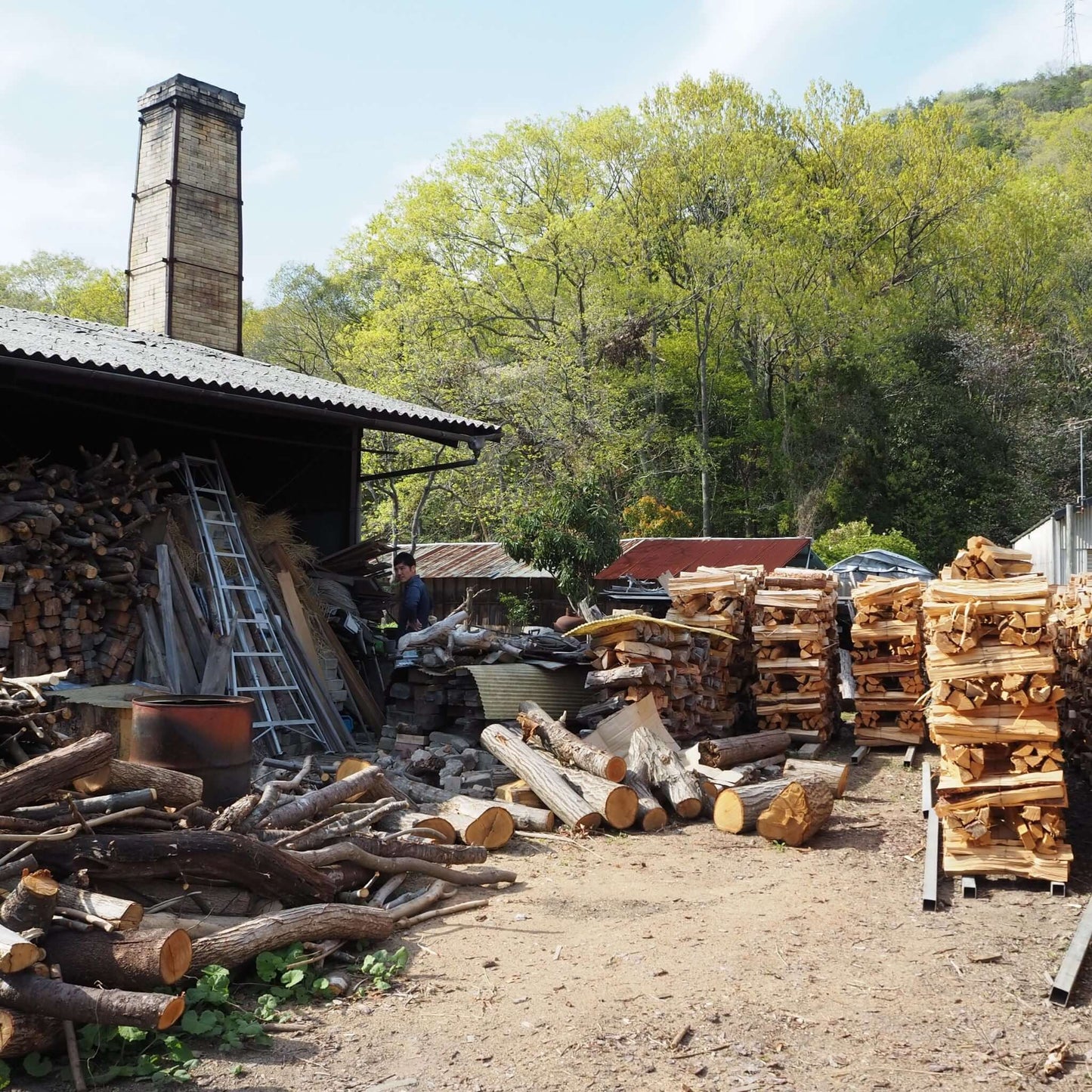
Bizen ware is not painted on the pottery, but rather the patterns are created by the flow of the flames inside the kiln and the techniques used. The way the flame hits the pot varies depending on where it is placed, such as near the entrance to the kiln, on a high spot, or near a corner. Each piece is made by relying on the natural flames, and no two pieces are ever the same.
"Goma" is a traditional Bizen ware technique characterized by brown and green patterns. This teapot is a type of "goma" and was fired using a technique called "kase goma." When ash floating in a wood-fired kiln falls on the pottery and remains without completely dissolving, it is called "kase goma."
This pale brown teapot has a tranquil atmosphere and allows you to feel the warmth of Bizen clay. Looking at the surface of the teapot body, you can see many small, sparkling dots created by the reaction between wood ash and Bizen clay. It has a delicate shine, similar to the mineral pigments used in Japanese painting.
While the entire teapot is pale brown, the handle is dark brown. This is because the ash on the handle melted at high temperature and became a natural glaze. Bizen ware teapots have different expressions depending on the angle from which you view them. This teapot is a traditional Chinese teapot called a horizontal pot, rendered using Bizen clay, and is a fusion of Chinese tea culture and the nature of Bizen.
Potter: ICHIRO MORI studio
https://moriichiro.com/
Firing: wood-fired kiln
Size: Total length 12.5cm (including handle and opening), body diameter 8cm, height 8cm
Capacity: 180ml full, 140ml practical
Weight: Approx. 148g
Packaging: Paper box
Note: There is a hole at the top of the lid knob. Because these are handmade, each piece is unique.
Because the clay particles are coarse, it is difficult to stop the hot water from flowing even when you press down on the hole in the top of the lid. When pouring water, do not tilt the teapot upright, but pour slowly to ensure a smooth flow.
*Bizen ware
Bizen ware is pottery made in Bizen City, Okayama Prefecture. Production of Bizen ware began around the end of the Heian period, about 800 years ago.1200~1300Bizen ware is fired at high temperatures of 100°C and is sturdy, so initially many pots and jars were made. The unique texture of the clay was popular with tea masters, and during the Muromachi period(Gregorian calendar1338Year~)Since then, a lot of pottery has been produced for the tea ceremony.
The distinctive feature of Bizen ware is that the clay is not glazed, but fired as is, and the beautiful patterns that make the most of the natural character of the clay. Bizen ware is mainly fired in a wood-fired kiln, mainly fueled by pine wood, and the pottery is fired for about two weeks.
There are two types of clay: rice field clay, which is mainly collected from rice paddies, and mountain clay, which is collected from mountains. The beautiful patterns that are unique to Bizen ware are created with clay that is rich in iron, and the composition of the claypotterEach piece has its own earthy flavor.
When Bizen ware gets wet, its color becomes lighter, and the color changes with prolonged use. This change is a great attraction, so you can enjoy watching the pot develop over time.
Couldn't load pickup availability
Out of stock
View full details


FAQ
Which type of of tea can I brew with the teapot?
It can be used for any type of tea. However, unglazed pottery is more likely to absorb the flavor of the tea leaves. By using different tea utensils for each type of tea, you can enjoy the flavor of the tea to the fullest.
For example, in the case of Japanese tea, sencha, fukamushicha, genmaicha, and gyokuro are all in the same family, but since hojicha has a strong roasted aroma, we recommend using a different tea utensil.
However, glazed pottery or porcelain tea utensils do not absorb the flavor of the tea leaves, so they are suitable for brewing various types of tea.
How do you wash a teapot?
Please wash the teapot with water, without using detergent. Ceramic teapots easily absorb detergent ingredients, which can affect the flavor of the tea.
Tea leaves remaining in the teapot are the main cause of tea stains. After brewing tea, we recommend removing the tea leaves once they have cooled and rinsing them with water.
Moisture remaining in the teapot can cause mold. Turning the teapot upside down will help it dry faster.
We do not recommend washing it in the dishwasher. Please wash by hand.
Can I remove tea stains from a teapot?
Here's how to remove tea stains.
1. In a bowl or pot, mix 24g of baking soda with 1 liter of water at 30-40°C.
*Do not use aluminum or Teflon-coated pots as they will react with baking soda.
2. Leave the teapot in the water mentioned in step 1 for 30-60 minutes.
3. Wipe off the tea stains with a soft sponge or cotton swab. Do not use hard sponges or brushes.
4. Rinse the teapot with water.
5. Thoroughly dry the teapot.
*Baking soda water may irritate your hands, so wear rubber gloves.
Can I return the product?
We do not accept returns unless the product is damaged when the package arrives.
Each tea utensil is slightly different and may have slight distortions or scratches. Please check the images posted on our online shop in advance.
If you have any questions about the detailed condition of the product, please feel free to contact us. We can send you additional images and videos of the product.
Do you ship internationally?
We can ship to the following countries:
China, Hong Kong, Macau, Taiwan, South Korea, Singapore, Malaysia, Indonesia, Thailand, Vietnam, Philippines
Are the goods antiques or second-hand goods?
All the products in the shop are new. We sell products produced by potters and kilns in Japan.